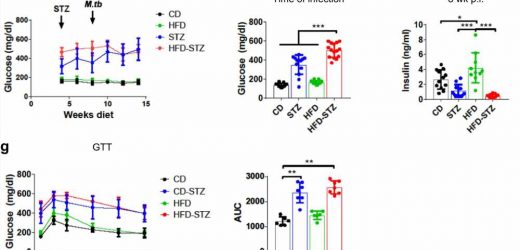
A collaborative study between the A*STAR Infectious Diseases Labs (A*STAR ID Labs) and the University of Massachusetts (UMass) Chan Medical School has uncovered that elevated glycerol levels are responsible for increased severity of tuberculosis (TB) disease in experimental models with…
Read More
HIV: Thwarting a protein in the hope of a better quality of life
To mark the occasion of World AIDS Day, Dr. Madeleine Durand and Andrés Finzi are working to reduce chronic inflammation and the risk of comorbidities in people living with HIV. In Canada, more than 43,000 people are living with a…
Read More
Im a doctor and didnt shower for five years – over washing could be harmful
A health expert explained that spending too much time grooming could spell bad news for your health. Dr James Hamblin explained there’s a difference between cleanliness behaviour, which is more about personal and aesthetic preferences, and hygiene behaviours, which tend…
Read More
Novel TMS protocol shows promise for treating hard-to-treat depression
Reviewed By making slight modifications to an already approved brain stimulation technique called transcranial magnetic stimulation (TMS), researchers have reported profound improvement in patients with hard-to-treat depression. Overall, 66% of patients with major depressive disorder who took part in the…
Read More
Research reveals risk factors for poor asthma control in children
A recent University of Alberta study is shedding more light on how perinatal health and early life events are related to asthma control in children. “Perinatal and early life factors and asthma control among preschoolers: a population-based retrospective cohort study”…
Read More
DNA sequencing reveals clonal evolution of tumor in childhood leukemia
Source: Read Full Article
Read More
Researchers: Lifestyle changes can reduce dementia risk by maintaining brain plasticity, but the time to act is now
Walk 10,000 steps a day, cut back alcohol, get better sleep at night, stay socially active—we’re told that changes like these can prevent up to 40% of dementia cases worldwide. Given that dementia is still one of the most feared…
Read More
Do you really need antibiotics? Curbing our use can help fight drug-resistant bacteria
Antibiotic resistance occurs when a microorganism changes and no longer responds to an antibiotic that was previously effective. It’s associated with poorer outcomes, a greater chance of death and higher health-care costs. In Australia, antibiotic resistance means some patients are…
Read More
People using ADHD medicines for a long time may have higher risk of cardiovascular diseases
Reviewed A large proportion of patients who start taking ADHD medication, especially young adults, stop within the first year. However, people who use ADHD medicine for a long time and in higher-than-average doses seem to have a higher risk of…
Read More
Huge jump in change of gender identity, research shows
Around one in 2,500 patients’ GP records indicated their gender identity was different to their sex at birth in 2018. This was up from one in 15,000 in 2000, according to research led by University College London using anonymised data…
Read More